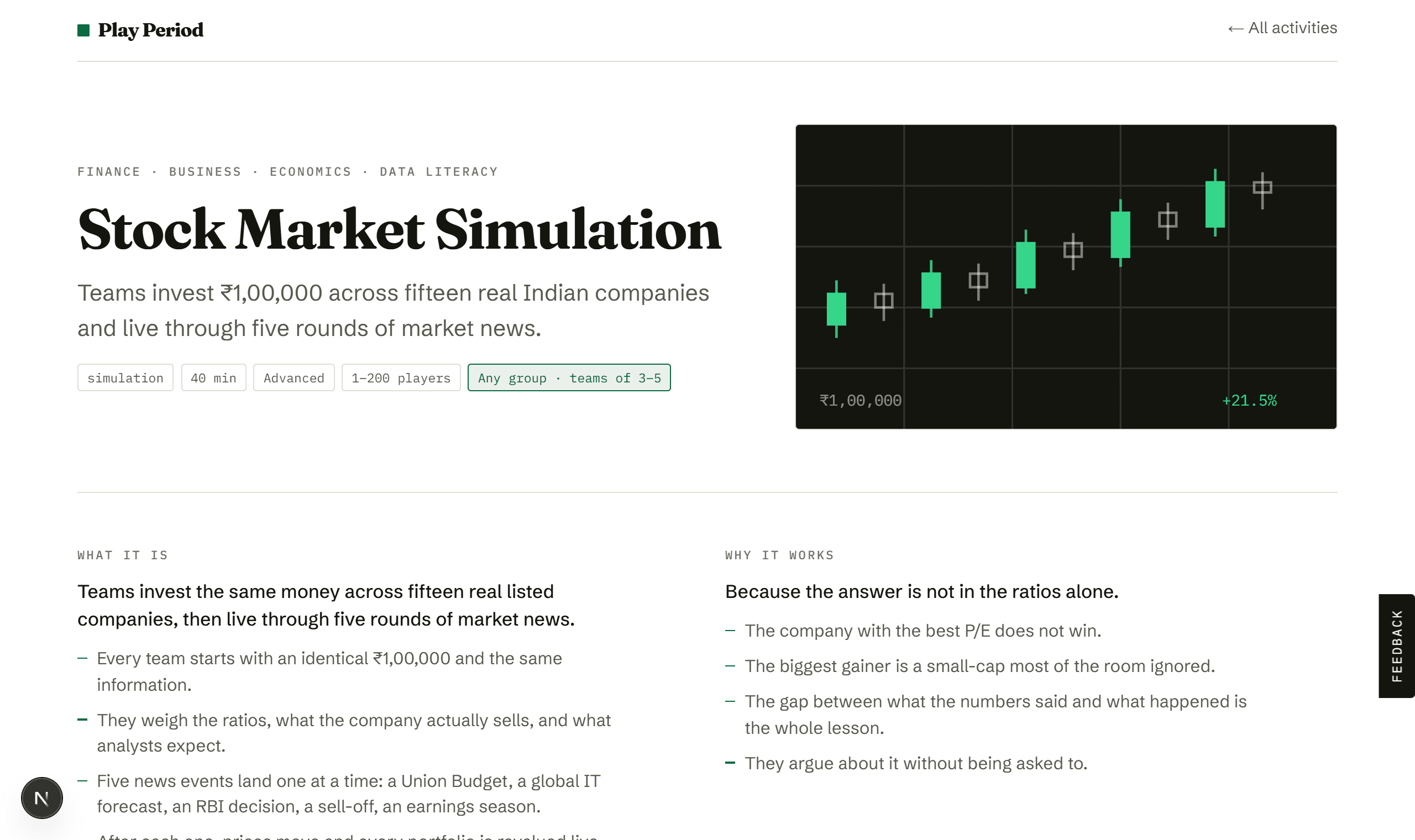
Stock Market Simulation
Teams invest ₹1,00,000 across fifteen real Indian companies and live through five rounds of market news.
What it is
Teams invest the same money across fifteen real listed companies, then live through five rounds of market news.
- Every team starts with an identical ₹1,00,000 and the same information.
- They weigh the ratios, what the company actually sells, and what analysts expect.
- Five news events land one at a time: a Union Budget, a global IT forecast, an RBI decision, a sell-off, an earnings season.
- After each one, prices move and every portfolio is revalued live on the board.
Why it works
Because the answer is not in the ratios alone.
- The company with the best P/E does not win.
- The biggest gainer is a small-cap most of the room ignored.
- The gap between what the numbers said and what happened is the whole lesson.
- They argue about it without being asked to.
Every screen you will touch, in order.
Real screenshots of the real thing. Swipe, or use the arrows. Nothing here is a mock-up.
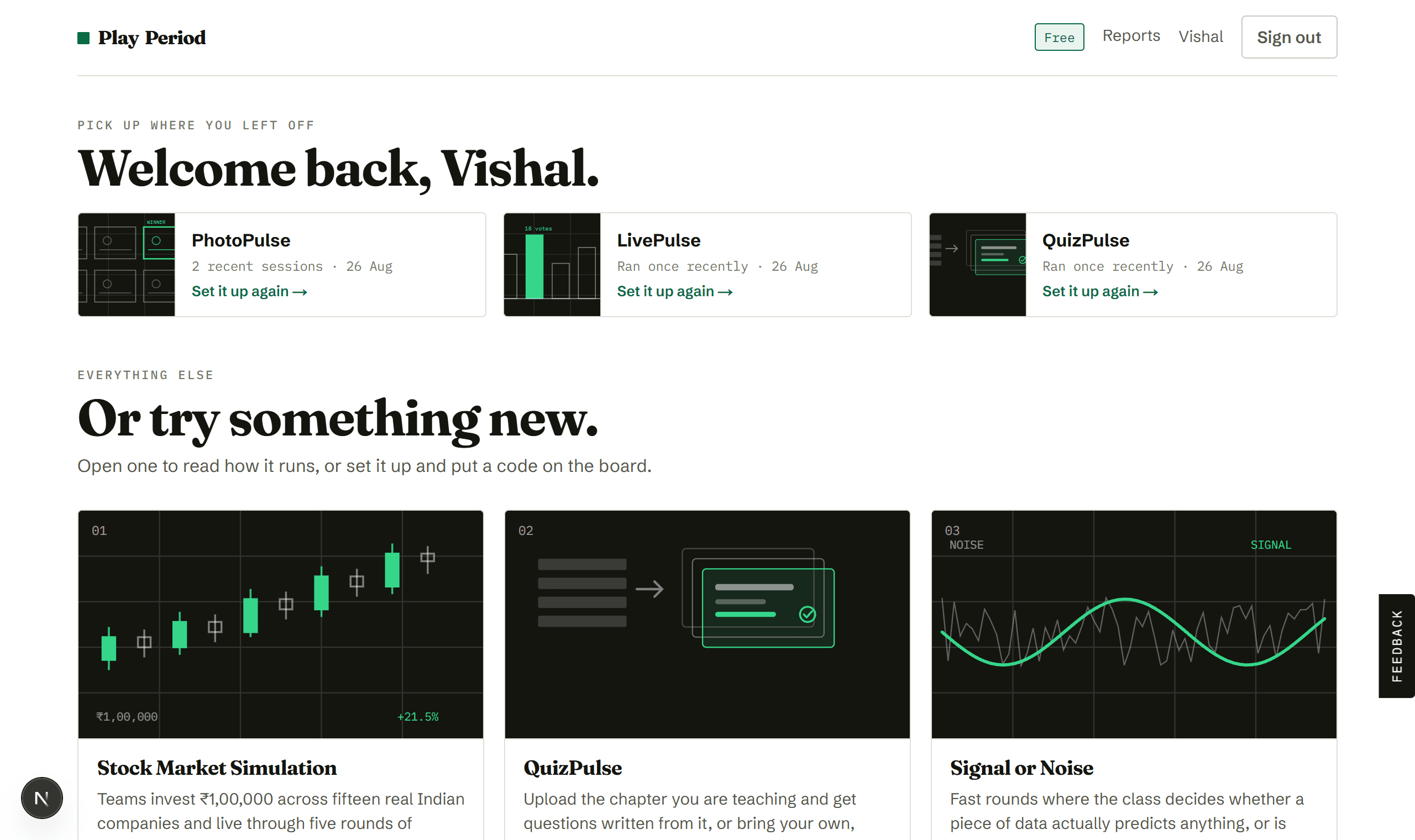
Pick an activity
Your library. Open any tile to read how it runs before committing to it.
Choose how to run it
Phones in hands, or board-only with you entering each team’s call. Same activity either way.
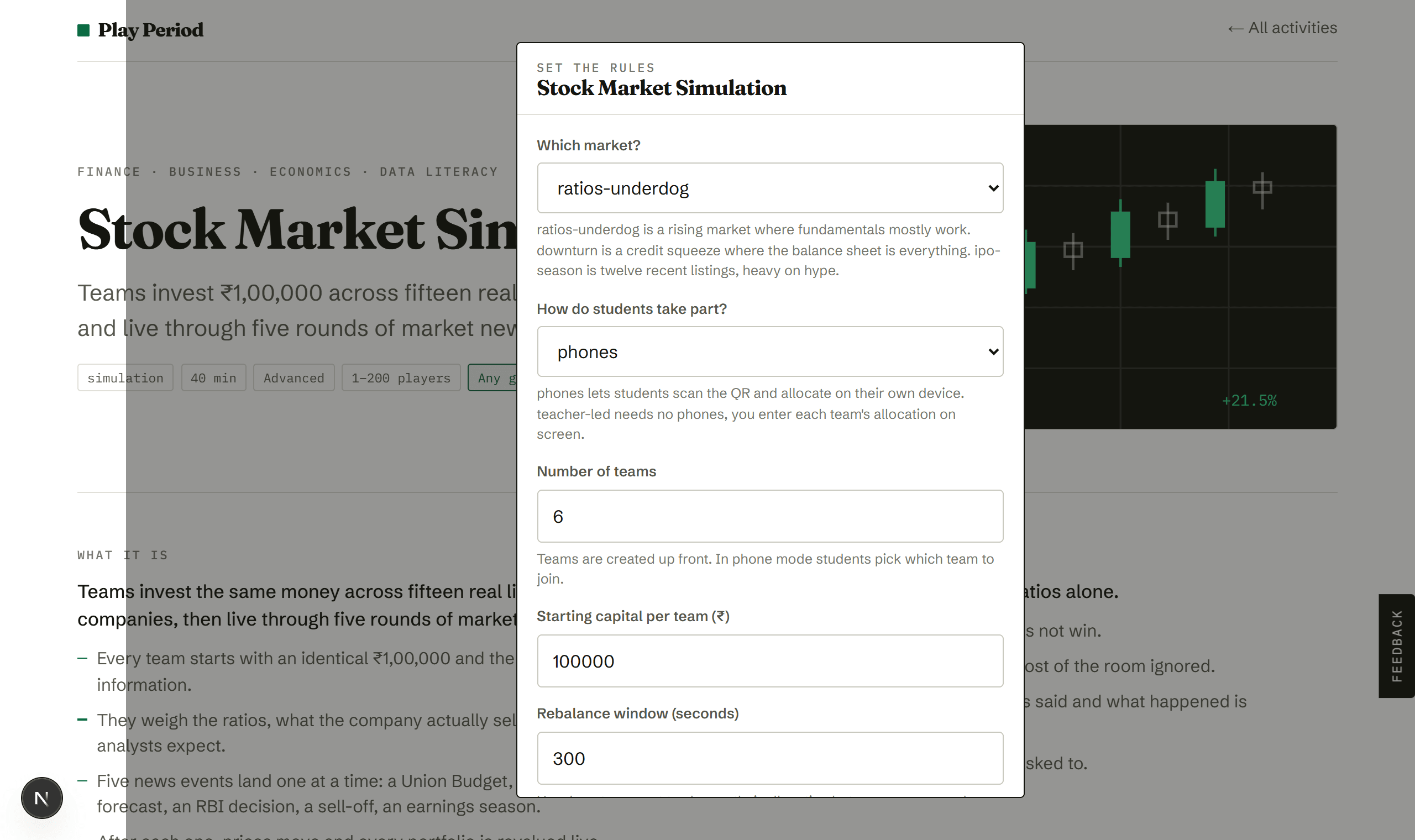
Set the rules
Number of teams, starting capital, how long each window runs, and whether teams may rebalance.
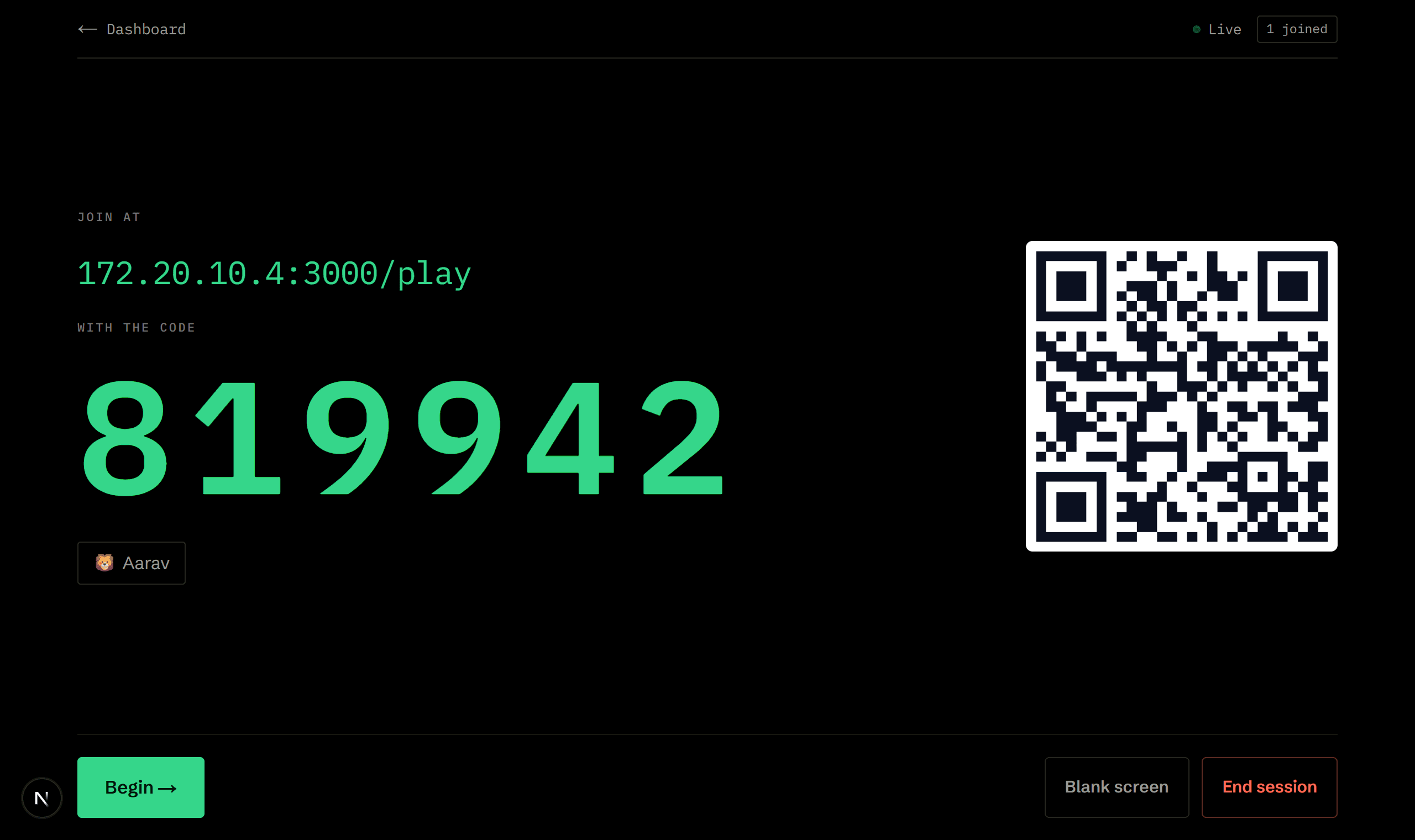
Put the code on the board
Teams scan and pick which team they are on. In board-only mode, skip this entirely.
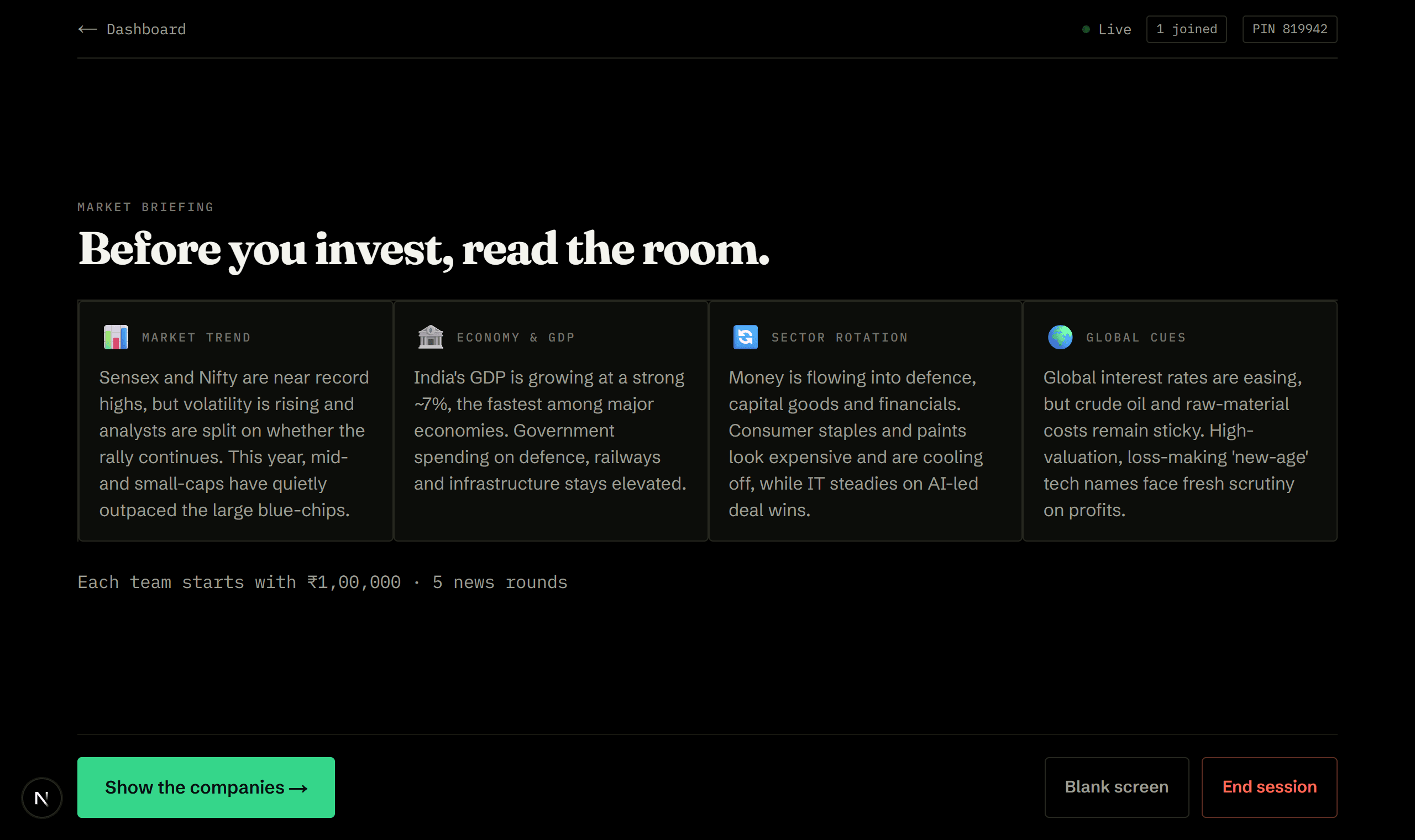
Read the market together
Four short macro notes set the scene before anyone commits money.
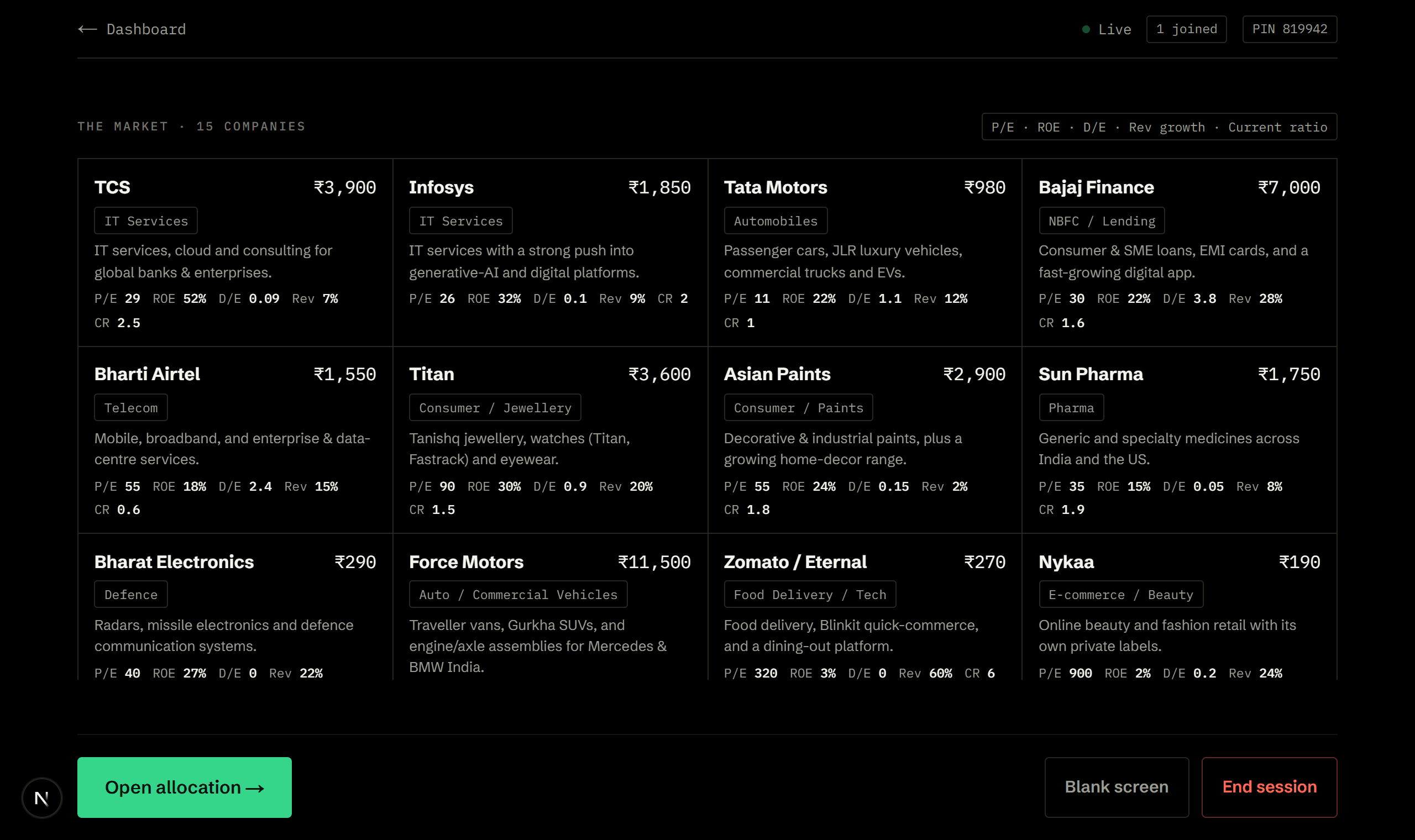
Fifteen companies, one screen
Ratios, products and outlook side by side. This is where the arguing starts.
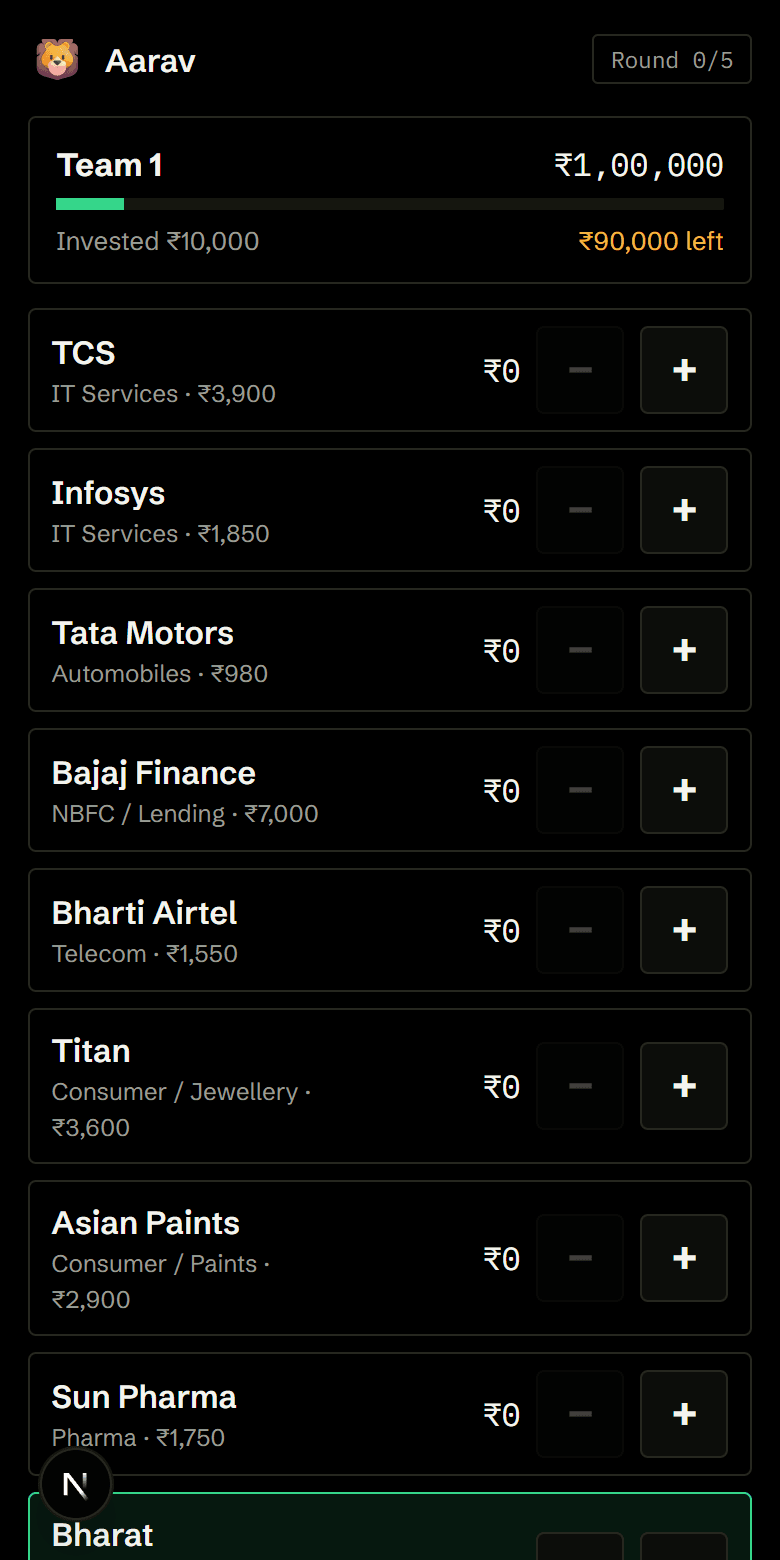
Split the money
Tap up and down in ₹5,000 steps. Remaining cash is always visible, and over-spending is impossible.
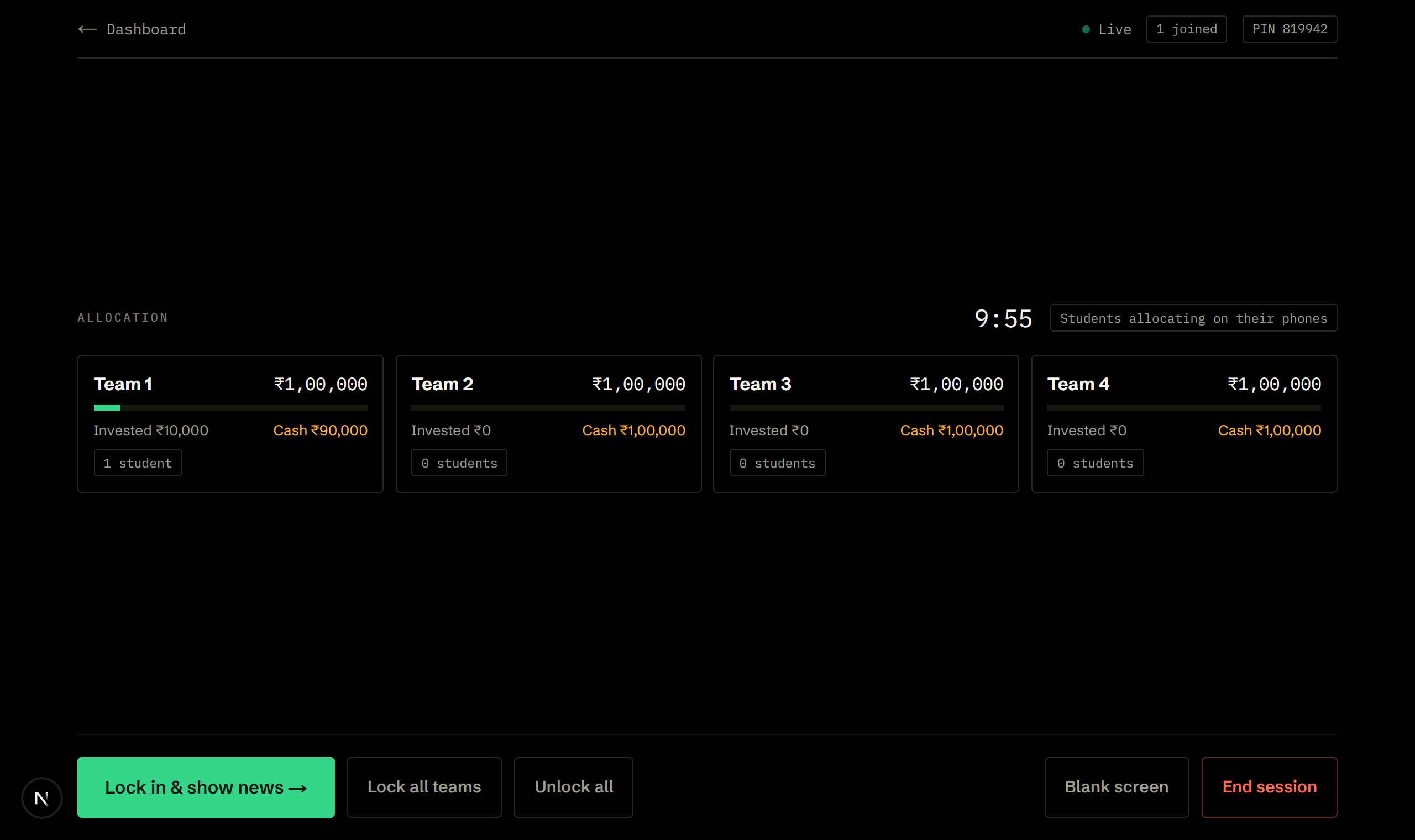
Watch every team fill in
Invested versus cash for each team, live. In board-only mode you type these in yourself.
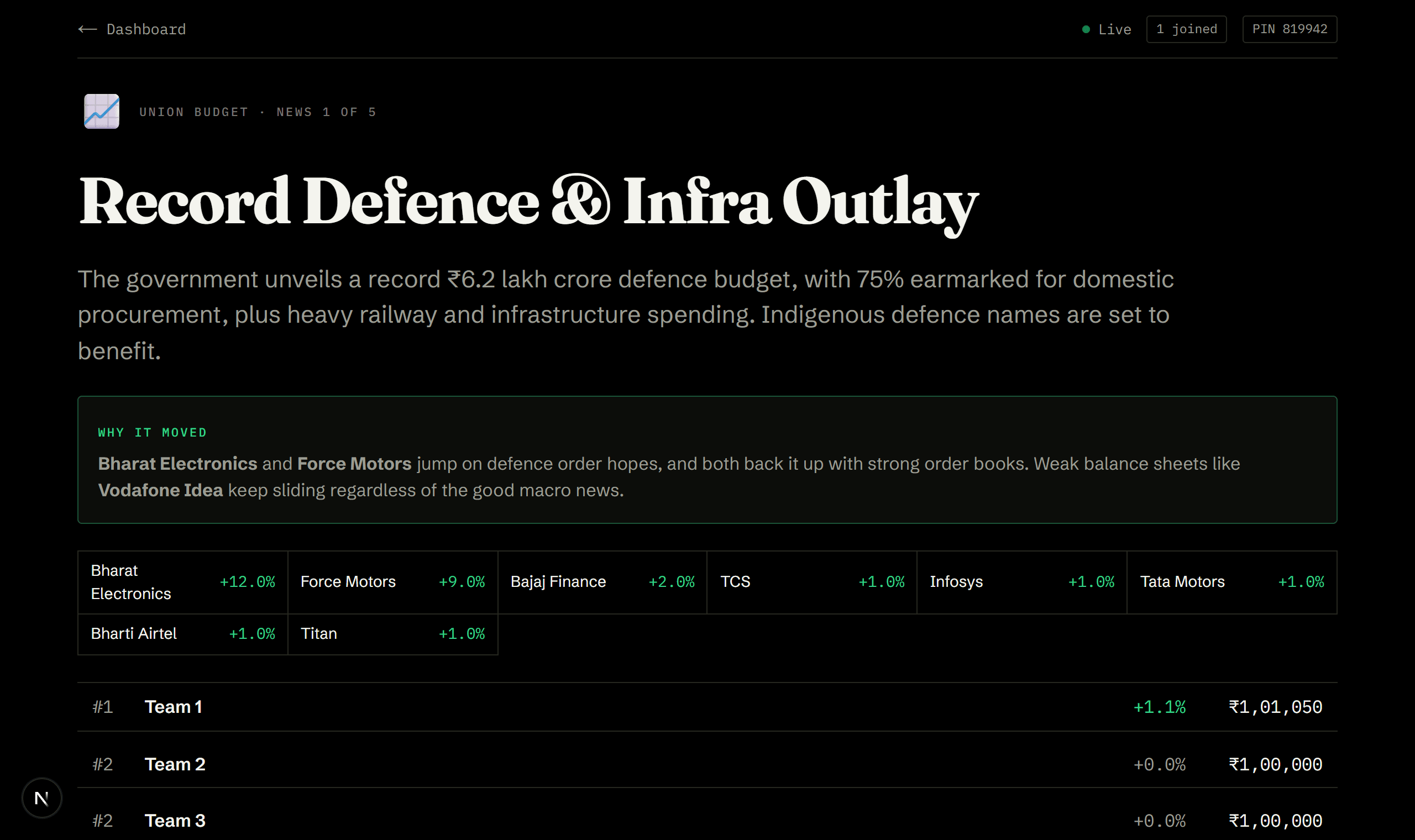
The news lands
Prices move, portfolios revalue, standings reshuffle, and the explanation of why appears underneath.
Pick the one that fits your room.
Neither is a cut down version of the other. Same companies, same maths, same report. The only difference is who touches the buttons.
Everyone on phones
Each team scans the code and moves their own money. You watch every team’s position fill in live on the board while they argue it out.
Best when people have phones and you want them handling the decision themselves.
Board only, no phones
Nobody takes a phone out. Teams discuss and call out their allocation, and you type it straight into the board. Identical maths, identical report.
Best when phones are banned, the wifi is unreliable, or you want the whole room watching one screen.
How a session goes.
- Briefing3 min
Four short macro notes go up: market mood, GDP, sector rotation, global cues. Read them together.
- Research8 min
All fifteen companies on one screen with their five ratios, products and outlook. Teams decide who they trust.
- Allocation5 min
Teams split their ₹1,00,000. A countdown runs; you can lock everyone in early.
- News1 min
One headline appears. Nobody can change their allocation now.
- Impact3 min
Prices move, portfolios revalue, standings reshuffle on the board. The "why it moved" explanation appears.
- Rebalance5 min
Teams may move money before the next headline. Repeat for five rounds. The window is five minutes by default; shorten it in setup to fit a 40-minute slot.
- Result5 min
Final standings, best and worst movers, and a report you can export.
The board shows one thing. Their phone shows another.
- Every team’s portfolio value, updating as they allocate
- How much cash each team has left uninvested
- The headline and, after impact, the explanation of why each stock moved
- A running leaderboard you can put up between rounds
- Their team’s total, invested amount and remaining cash
- All fifteen companies with prices, tapped up or down in ₹5,000 steps
- A lock when the window closes, so no last-second edits
- Their team’s rank and return after every round
What we would tell you over tea.
- Six teams of four works better than twenty-four individuals, because the arguing is the point.
- Do not explain which stock will win. The reveal after round one does the teaching for you.
- Ask one team to justify their worst decision at the end. That discussion is usually the best five minutes of the session.
- Short on time? Turn off rebalancing so the first allocation is final, and the whole thing fits in 25 minutes.
Ready when you are.
Making an account takes a minute, and the whole library opens with it.